Showing posts with label cars. Show all posts

Tuesday, July 13, 2010

2011 Porsche Cayenne Sports V6

2011 Porsche Cayenne V6


The Porsche Cayenne wears many hats. It masquerades as both the automaker's entry-level vehicle and as its flagship turbocharged SUV. Broad-shouldered in stature, one variant can blast to 60 mph in less than five seconds and top 170 mph, while another may be propelled quietly under the emissions-free power of electricity. Regardless of where they rank in the hierarchy, multi-talented Cayenne models are capable of traversing deep streams, towing 7,700-pound trailers and carrying five passengers and their luggage into the hands of waiting luxury hotel valets.

The six-cylinder Porsche Cayenne is hardly the automaker's crown jewel, but it's frequently one of the best-selling models in the lineup. Following on the heels of its more powerful siblings, the entry-level SUV can't hide behind its engine displacement – it must prove itself through luxury, improved performance, fuel efficiency and value.

We just spent a couple days driving the all-new Cayenne in Germany, and unlike two months ago, when we put the flagship Cayenne Turbo and the eight-cylinder Cayenne S to the test at the beautiful circuit and off-road course at Alabama's Barber Motorsports Park, the European venue gave us the opportunity to drive the entry-level Cayenne in crowded city streets and on the wide-open Autobahn. What's under the hood of the six-cylinder Cayenne, and why is it unique? How does it drive compared to its eight-cylinder siblings? Most importantly, how does it compare to its competition? Find out after the jump.

Porsche will offer four different Cayenne models in North American in 2011: Cayenne, Cayenne S, Cayenne Turbo and Cayenne S Hybrid. (We don't get the Cayenne Diesel, but don't get us started.) In typical Porsche fashion, the automaker introduced its top-level models first with the arrival of the eight-cylinder Cayenne S and Cayenne Turbo in May, while the just-released six-cylinder Cayenne (and the Cayenne S Hybrid) won't be unveiled at your local dealership until this Fall.

While the world is just now getting its hands on it, the arrival of the six-cylinder model has been anticipated for some time, but its powerplant specifics have been largely shrouded in mystery. With an all-new Porsche-developed 3.6-liter V6 on the table (recently fitted to the Panamera), the automaker had a choice between its own engine and an updated version of the carryover Volkswagen-sourced 3.6-liter unit. Economics won the battle, so the standard Cayenne will once again share powerplants with the Volkswagen Touareg.


Displacing 3,598 cubic centimeters, the 10.6-degree V6 features an iron block and aluminum cylinder heads. Unlike the all-aluminum 90-degree V6 in the Panamera, the Volkswagen narrow-angle "VR6" powerplant does not have balance shafts (our calibrated rears say the Porsche V6 is slightly smoother). While the Volkswagen variant makes 280 horsepower, Porsche engineers tweaked the tuning and gifted the engine with a new intake manifold to customize it for duty in the Cayenne. The result is a bump to 300 horsepower (at 6,300 rpm) and 295 lb-ft of torque (at 3,000 rpm). Bolted to the back of the engine is Porsche's excellent new eight-speed Tiptronic S automatic transmission sending power to all four corners through an electronically-controlled all-wheel drive system. There is no low range case anymore, as Porsche says the lower gears are sufficient for serious off-road travel. Even with six-cylinder power, the Cayenne is rated to tow the same 7,700-pound trailer as its siblings.

Aside from the missing cylinders, the six-cylinder Cayenne models also wear slightly smaller standard brakes. The fronts are six-piston aluminum monobloc calipers (painted black) on 13.78-inch iron rotors, while the rears are four-piston calipers on 13-inch iron rotors. Porsche's composite ceramic brake (PCCB) system is optional (and obvious to everyone within eyesight with its huge metallic rotors and yellow calipers). Steel springs and gas pressurized dampers are the only suspension offering.


Realizing the wheel/tire/brake packages are upgradeable on all trim levels, it's difficult to tell the models apart without checking the scripted badge on the hatch or catching a glimpse of the front. It's the nose that differs. The Cayenne Turbo wears an aggressively large grille and intake, while the normally-aspirated models share smaller grilles (the V8 model is finished in black, while the V6 receives an aluminized finish). The Cayenne V6 also sports twin brushed stainless steel oval exhaust outlets, just like the Panamera V6.

The lighter powertrain pays off at the scales. The Cayenne SUV weighs just 4,399 pounds, undercutting its sibling Cayenne Turbo by nearly 400 pounds and leaving the competition in line at Jenny Craig, with the Mercedes-Benz ML350 coming in 330 pounds heavier and the six-cylinder BMW X5 lugging around an extra 531 pounds.


With the key in our left hand, we climb into a nondescript six-cylinder Cayenne wearing 19-inch wheels (wrapped with 265/50YR19 Pirelli tires). The all-new interior mirrors the elegant styling of the Panamera sedan – very upscale and meticulously finished from its beautiful wood and aluminum accents to the leather stitching on the dashboard. The seat and steering wheel are infinitely adjustable and outward visibility is good, although the backup camera does help.

As mentioned in our first driving impressions a few months ago, the Cayenne platform is incredibly enjoyable to drive. Its driving mannerism are more "big sedan" than oversized 'ute, meaning the brakes and steering are responsive to the driver's inputs, not merely taking suggestions. It doesn't feel nearly as ponderous as the Audi Q7 or as heavy as the BMW X5 when touring tight city streets.


Acknowledging that it has less mass to haul around than its predecessor, the 0-60 mph sprint now takes about 7.5 seconds, putting it decidedly mid-pack among its competitive segment. Most importantly, with excellent gearing down low, you won't miss the V8 or Turbo under 45 mph as the six-cylinder Cayenne moves off the line enthusiastically thanks to the aforementioned eight-speed Tiptronic tranny.

More than content with its performance around town, we steered the six-cylinder Cayenne towards the Autobahn to try its powertrain under more demanding conditions. As stable at high speeds as it is sitting still in a parking lot, the SUV easily held velocities between 80 and 110 mph. As expected, it does lose most of its stamina as the speed increases over 90 mph (e.g., the Cayenne Turbo rockets to 125 mph in about 13 seconds, while the Cayenne V6 does it in a longish 35 seconds). With patience, and a long open stretch of road, we were able to coax it up to an indicated 134 mph, although Porsche claims it will run 143 mph if given the opportunity. When it came time to bleed off the speed, the standard brakes were more than up to the task.


Porsche has priced the Cayenne very aggressively. The entry-level six-cylinder model starts at $46,700, making the base SUV the automaker's least expensive offering in the States. Shaving more than another second off the 0-60 sprint, the eight-cylinder Cayenne S begins at $63,700. The new Cayenne S Hybrid begins $67,700, while the flagship Cayenne Turbo has a base price of $104,800.

The assertive base price means the entry-level Cayenne is priced in the thick of its European competitors, including the six-cylinder BMW X5 ($45,800), the six-cylinder Mercedes-Benz ML-Class ($45,700) and the six-cylinder Audi Q7 ($46,900). The Porsche offers more power than the Audi and Mercedes, but BMW's new-for-2011 twin-turbo 3.0-liter under the hood of the X5 xDrive35i is stronger than the Cayenne's 3.6-liter.


Porsche does not offer a "token" third-row seating option (like BMW and Audi), but its second-row seats slide on rails and the seatbacks recline/fold making the interior both accommodating and very configurable. To its dynamic advantage, the Porsche has the most modern and lightest platform. And, thanks to its Panamera-inspired interior, the Cayenne's cockpit is arguably the most luxurious and inviting of the foursome, too.

But we wouldn't buy the six-cylinder Porsche Cayenne for its engine.


Despite the fact there's nothing inherently wrong with the lesser power unit – it's more than competent – Porsche offers much better combustion routes if you are seeking pavement-pummeling power and a hybrid option if you are on a quest for fuel economy. Instead, consider the entry-level 3.6-liter V6 variant as a heavily discounted way to enjoy the Cayenne's silky eight-speed Tiptronic, bulletproof platform, refined chassis dynamics, luxurious cabin amenities, surefooted all-wheel drive, accurate steering feel and impressive braking capabilities at less than half the cost of the Cayenne Turbo.

The Panamera sedan is currently basking in the brand's sales-leading spotlight, yet the Cayenne will undoubtedly take back its top position when all the models fill the showrooms later this year. Unlike its predecessor, whose owners were often accused of driving the overweight SUV solely for the polished gold, maroon and black badge emblazoned on the hood, the new six-cylinder model is an agile, attractive and well-mannered gentleman. While it may not run as quickly as its athletic siblings, this Cayenne is stout enough to be distinctive on its own – with or without the Porsche crest leading its way.

Saturday, June 26, 2010

Lexus recalls HS250h over risk of excessive fuel leakage

2010 Lexus HS250h


Back in the 1970s, the Ford Pinto was the focus of many headlines due to a fuel tank issue which caused excessive amounts of gasoline to leak during a rear-end collision. Now, three decades later, Lexus is having a similar problem with its HS250h hybrid, and has filed a report with the National Highway Traffic Safety Administration to issue a voluntary recall of these vehicles. Up to 17,000 of the luxury hybrids are affected.

In the case of the HS, excessive fuel leakage occurred during rear-end collisions at speeds of 50 miles per hour. We don't need to remind you about the dangers of excessive fuel spillage, but let's just say that the end result can be very, very bad.

As of this writing, Lexus has not advised NHTSA about what steps will be taken to fix the defective HS models.


[Source: Lexus]

Friday, June 25, 2010

Ford reveals refreshed 2011 Mondeo with 237-hp 2.0L Ecoboost

2011 Ford Mondeo


Ford of Europe has dropped the first official photos of the refreshed 2011 Mondeo, along with some details on the mechanical updates. The only substantive visual change is a reshaped front fascia with a larger trapezoidal lower grille similar to the Fiesta and the upcoming 2012 Focus, as well as reworked driving lights.

Behind that new grille Ford has added the same type of active shutters the Focus is getting to restrict air-flow at higher speeds or colder temperatures, reducing turbulence and aerodynamic drag.

The rest of the engine compartment is occupied by two new powertrain options, including a more powerful 237 horsepower version of the 2.0-liter Ecoboost inline-four that debuted earlier this year. At 179 grams per kilometer of CO2 emissions, the new Ecoboost will have the same fuel consumption as the lower power unit and 20 percent less than a V6 of similar power. This more powerful unit is likely the one that we will get in the Edge and Explorer for 2011. All of the Ecoboost engines are mated up a six-speed dual-clutch Powershift gearbox similar to the unit that just debuted in the Fiesta in North America.

The second new engine is a reworked 2.2-liter diesel inline-four that now puts out 197 hp, a 12 percent bump from the previous edition. The new Mondeos will will be shown publicly at the Moscow Motor Show in August and go on sale in the fall.

Wednesday, June 23, 2010

Review: 2010 BMW 335i Sedan is what we've been missing

2010 BMW 335i Sedan


We like to think of ourselves as a voice of the people – a place for the proletariat of the interwebs who clamor for an honest take on the latest automotive hardware. To that end, we've always viewed the constant stream of fawning over BMW with something of a jaundice eye. We get it. The company builds good products, but does it really deserve wave after wave of gushing prose in every car magazine? Even more troubling, does the 3 Series deserve its honored position as the benchmark against which all other mid-sized sports sedans must be measured?

In a word, yes. We say that almost against our plebeian nature, but if you've come searching for a scathing tear-down of the bread-and-butter 3, best point your clickers elsewhere. After a full week with the 2010 BMW 335i sedan, we've come to understand why the bastions of auto-journodom have spent the last 10 years drinking the BMW Kool-Aid. It's just that good. Read on to find out why the latest 3 Series continues the tradition.

BMW has had 35 years to get the 3 Series recipe just right, and stylistically, the car has never exactly shattered the mold with wild bodywork. While Bimmer fanboys continue to debate whether or not Chris Bangle was the brand's savior or Satan, no one will debate the fact that his work on the 3 Series was a much needed change of pace. To this day, Bangle's influence still lingers over the sheet metal of our sedan. While the "Bangle Bustle" never quite made it to the four-door's rear, the subtle creases and slight flares that came into the BMW bloodline under the designer's reign remain to this day. The look isn't something that we'd call outrageous, but it is quietly gorgeous.

Up front, the 2010 335i couldn't be mistaken for anything other than what it is. The nose wears the same flared nostril grille and round headlights as the rest of the Bavarian flock and the slight contour of the hood line gives the face something of a furrowed brow. As a result, you can't help but think that if this car could speak, it would do so in a series of guttural grunts and growls. Whatever the tongue, traffic seems to understand just fine – cars make room for the 2010 335i like a bad habit.


Our tester came dipped in Le Mans blue – a dark metallic paint that makes every crease and curve pop no matter the lighting. The sedan also wore a set of 18-inch, 15-spoke dancing shoes that are part of the $3,750 M Sport package. For that kind of change, BMW will be kind enough to equip your four-door with a slightly tweaked suspension and reworked aerodynamic cues, along with a speed limiter that allows a higher top end. We'll – ahem – have to take their word on that last part. Out back, the 335i can be differentiated from its less potent kin by the prominent dual exhaust and a reworked rear diffuser. When viewed from the rear, the car loses some of its menace, but the design is still plenty attractive.

The M Sport package brings with it a smaller, leather-wrapped steering wheel and an M-branded shift knob and door sills. Our tester also came with a snappy two-tone interior, complete with beige leather seats and a black dash with faux metal accents. The overall effect is attractive, though the M goodies seem at odds with the light-colored leather. That's okay, though, because that steering wheel and shifter feel fantastic in the palm of your hands, even if they look like the 335i is wearing a pair of running shoes with a three-piece suit.


While some buyers may find the dash a little plain, we're smitten by the fact that it isn't awash with unnecessary buttons or dials. In a world where most manufacturers have taken pains to turn their consoles into quasi functional art, BMW seems content to make everything easy to find and a cinch to operate – at least in this spec. A calm, uninterrupted line carries all the way from the instrument cluster to the passenger side door. And speaking of the instrument cluster, BMW has stuck with its standard two dials. There's a speedometer, a tachometer, and not much else.

The front thrones are supportive enough for long interstate hauls with bolsters capable of keeping your rear planted should you decide to fling the sedan through the mountains. The rear seats are also nice, but don't quite have the same derrière-gripping ability as what you'll find up front. They offer decent leg room, though, so passengers in the six-foot realm can reasonably fit back there, even for extended periods of time.


That's a good thing, considering we found ourselves hijacking our passengers for extended romps through a variety of backroads. Few things will talk you into taking the long way home quite like the twin-turbocharged 3.0-liter inline six-cylinder engine that BMW has used under the car's hood since 2007. The engine produces a dead even 300 horsepower and 300 pound-feet of torque, and the muscle is enough to hustle the sedan's 3,593-pound curb weight through traffic. We noticed a considerable amount of lag below 2,000 rpm, which other 3 Series have complained about and BMW has acknowledged and attempted to fix at least once. That said, we expect this issue to be addressed with the 2011 model that features a single, larger turbo.

According to the specs, the inline-six manages to crank out its full torque from just 1,400 rpm, but the power simply isn't there until the mill begins to spin a little quicker. Fortunately, the revs build fast and it's easy to keep the engine where it needs to be thanks to the six-speed manual transmission. Shifts are quick and gear changes feel precise without being notchy. We did notice that hard shifts from first to second require a certain amount of patience, though that could have just as easily been attributed to the fact that our tester came with over 7,000 brutal miles at the hands of the cruelest of the cruel – auto journos.


Buyers familiar with typically weighty steering from BMW will find the tiller in the 2010 335i a comfort. The wheel feels a little on the heavy side while you're muscling around the parking lot of the local Target, but comes into its own should you decide to do any hustling down your favorite stretch of tarmac. Turn in is excellent and there's little doubt it could get around a track with purpose. That sensation is bolstered by the brakes on the 335i. With 13.7-inch discs up front, the sedan has no problem scrubbing speed for the corners or coming to a complete halt should you demand it. In all, it's the balance in the big bad 3 Series that kept the grin on our faces.

With a damn-near perfect 50.9/49.1-percent front/rear weight balance in manual transmission guise, the car begs to be flung around. Throw in springs that are firm without being brutal and spot-on dampening, and the turbo 3 series is – to put it lightly – magnificent to drive. Despite the button down exterior and executive interior, the 2010 335i has bones that are simply meant to be flogged and truly enjoyed – something we have a hard time saying for nearly any other car in this segment. From the bark of the dual exhaust to the bushels of grip and braking power, the 335i leaves little to complain about.


But hey, we're the motoring press. If we weren't complaining we'd be on a cold slab in the county morgue. According to the EPA, sane drivers should manage to see somewhere around 17 mpg city and 26 mpg highway – decent numbers given the horsepower on hand here, but not exactly figures you'd want to bring home to your mother, either. Do some quick averaging, and you realize that combined fuel economy sits at a shave above 21 mpg. Speaking of naughty digits, BMW does make you pay for all of the engineering goodies that it's packed into the 335i. The car carries an MSRP of $40,600, and that's before you start adding on fun stuff like the M Sport package or special paint.

Set your eyeballs on that price tag, and it's easy to start nitpicking all that the 335i doesn't have as standard equipment. As a base model, you don't get navigation, satellite radio, a rear facing camera or any of the other tech goodies more economical manufacturers hand over for next to nothing these days. And at first, that really irritated us. But as the week drew to a close, we began to realize that the car's price tag wasn't wrapped up in useless electronics or bells and whistles we'd use once and then forget about. No, each and every penny in the 2010 335i is soaked into what matters most in a car to people like us – the engine, transmission, chassis and suspension. The 3 Series is a driver's car and it deserves every accolades it receives. The aforementioned 2011 model packing BMW's new N55 single-turbo engine should receive even more.

Electric Audi A1 won't be produced

Audi A1 e-Tron

According to a report out of Italy, Audi boss Rupert Stadler has said that the Audi A1 e-tron concept will not see production. Apparently the house of Audi believes that the conventional A1 will be sufficiently frugal and kind enough on the environment with its stop/start and brake energy recovery system. Additionally, there seems to be some issues with the A1's platform and its ability to house all the necessary EV components. If true, 'tis a shame – that cargo-floor-mounted Wankel engine paired with lithium-ion batteries was supposed to be good for 154 mpg, and the A1 e-tron is a package we would have enjoyed by being so green we made grass jealous.

Hyundai: Sonata 2.0 Turbo hits 60 in 6.5 seconds, returns 34 mpg highway

2011 Hyundai Sonata Turbo

According to Hyundai, its new 274-horsepower 2.0-liter turbocharged engine for the 2011 Sonata sedan is going to be a real gem. To wit, the Korean automaker says the boosted-four will propel its midsize sedan to 60 miles per hour in just 6.5 seconds. That's serious speed for the segment and it means the Sonata will at least have the accelerative chops to stick with the rest of the sport sedan competition.

Of course, these days frugality is just as important as horsepower, and Hyundai assures us that its 2.0T-powered Sonata will be able to return the promised 22 miles per gallon in the city and 34 on the highway – all on regular-grade fuel. For those who like to keep track of such things, Hyundai claims those figures are 16% and 17% better respectively than the outgoing 3.5-liter V6.

Want more? Well, that's all we can share for now... but our initial driving impressions will be on their way just as soon as Hyundai gives the word. Stay tuned.

[Source: Hyundai]

Friday, June 18, 2010

Chrysler Sebring convertible to survive

Chrysler Sebring Convertible


Much to our collective surprise, Chrysler's new Italian overlords have reportedly decided to keep the Sebring convertible alive and even give it a major refresh early next year. The Sebring and Dodge Avenger sedans are due to get their updates before the end of this year, and the Sebring could yet receive a new name. Most of those changes including reworked suspensions and improved interiors, and the company's new Pentastar V6 will migrate into the droptop in the new year.

As you may recall, back in the 1990s, the Sebring was consistently the top-selling convertible in America thanks to its reasonable price, relatively attractive styling and seating for four. The current model completely squandered that advantage by combining all the negative aspects of its sedan counterpart with a highly compromised design that includes three different tops including vinyl and canvas soft tops and a very finicky folding hardtop. So why keep the Sebring convertible around? According to AllPar, it's because they remain a favorite of rental fleets in warm weather states thanks to "move-em-out" pricing from Chrysler and demand for four-seat convertibles from vacationers.


[Source: AllPar]

World's largest car collection closer to being under one roof

Rendering of the main hall at the LeMay America's Car Museum


If you've ever wondered who has the largest private car collection in the world, wonder no more. Until his death in 2000, Harold E. LeMay had the distinction of laying claim to that title with over 3,000 classic vehicles in his possession. His gems included everything from a 1916 Abadal Buick to a 1983 DeLorean DMC 12 and pretty much everything in between. Just before LeMay passed away, he formed a non-profit group with the goal of building a massive museum to house his collection and educate the public on the impact and evolution of the automobile.

LeMay's vision for the garage to end all garages was no less grand than his collection – a massive steel and arched glass structure designed by Alan Grant of Grant Architects. After a decade of fundraising by LeMay's widow and a number of grants from state and local governments, the LeMay America's Car Museum officially broke ground this week. The project is expected to cost a total of $100 million when completed, and will feature complete educational exhibits in addition to showcasing the collection. For more information on the cars and the museum, be sure to check out the LeMay Museum site.

[Source: The New York Times]

Thursday, June 17, 2010

Mahindra sued by U.S. distributor over pickup delays

Mahindra Pik-Up


According to the Hindustan Times, Global Vehicles, the Atlanta-based company that is slated to be the exclusive U.S. distributor for Mahindra & Mahindra vehicles, alleges that more than $95 million has been spent on getting the country ready to buy the Indian Pik-Ups. The problem is, and has been, that Mahindra still hasn't provided any vehicles to sell. The Indian company is waiting on paperwork and testing for EPA approval to sell the trucks here.

GV is tired of waiting idly, and has brought a lawsuit against Mahindra for having missed two soft deadlines and two hard ones. GV claims the delay has been "inordinate," Mahindra says the lawsuit is "without merit." We say that no matter who's right, this is not the way to bring a truck to market.


[Source: Hindustan Times]

Wednesday, June 16, 2010

Volkswagen goes soft-roading with new CrossPolo

2012 Volkswagen CrossPolo


Smaller cars may be taking over from larger SUVs around the world, but that hardly means that the go-anywhere, rough-and-tumble image of the sport-ute has disappeared from buyers' minds. That's where softroaders come in. Vehicles like the Volkswagen CrossPolo blend off-road styling with a small form factor.

VW gave us a sneak peek at the new CrossPolo back in Geneva, but is only officially revealing the full range now. Based on the new Polo hatchback, the CrossPolo gets a boost in ride height and some tasteful body cladding to give it that backcountry appeal. A new front end – treated in dark gray and blending into the wheel arches, quarter panels and rear bumper – plus 17-inch alloys and roof rails complete the package, which can be ordered by non-U.S. types with six engine options – three gasoline and three diesels – in any of six exterior shades, including two colors unique to the CrossPolo.

Thursday, September 24, 2009

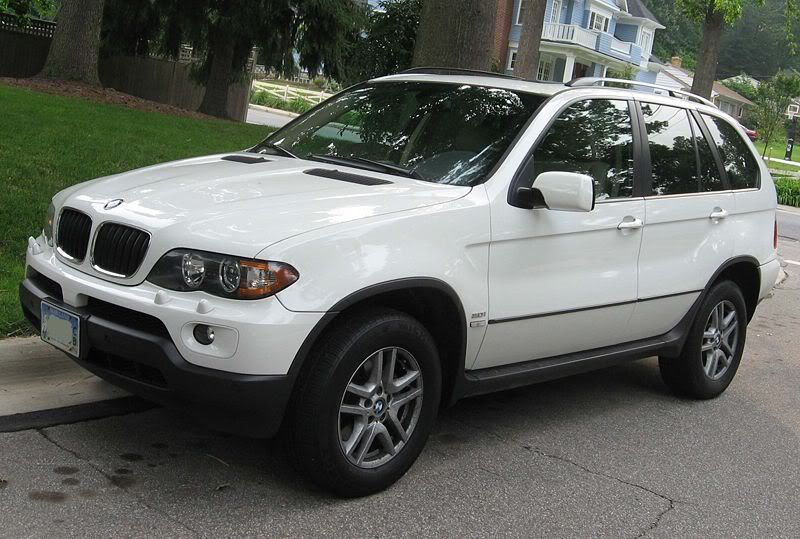
Bmw X5


Bmw X5
Bmw X5 suv

Bmw X5
Bmw X5

Bmw X5
Bmw X5

Bmw X5
Bmw X5 photo

Monday, September 14, 2009

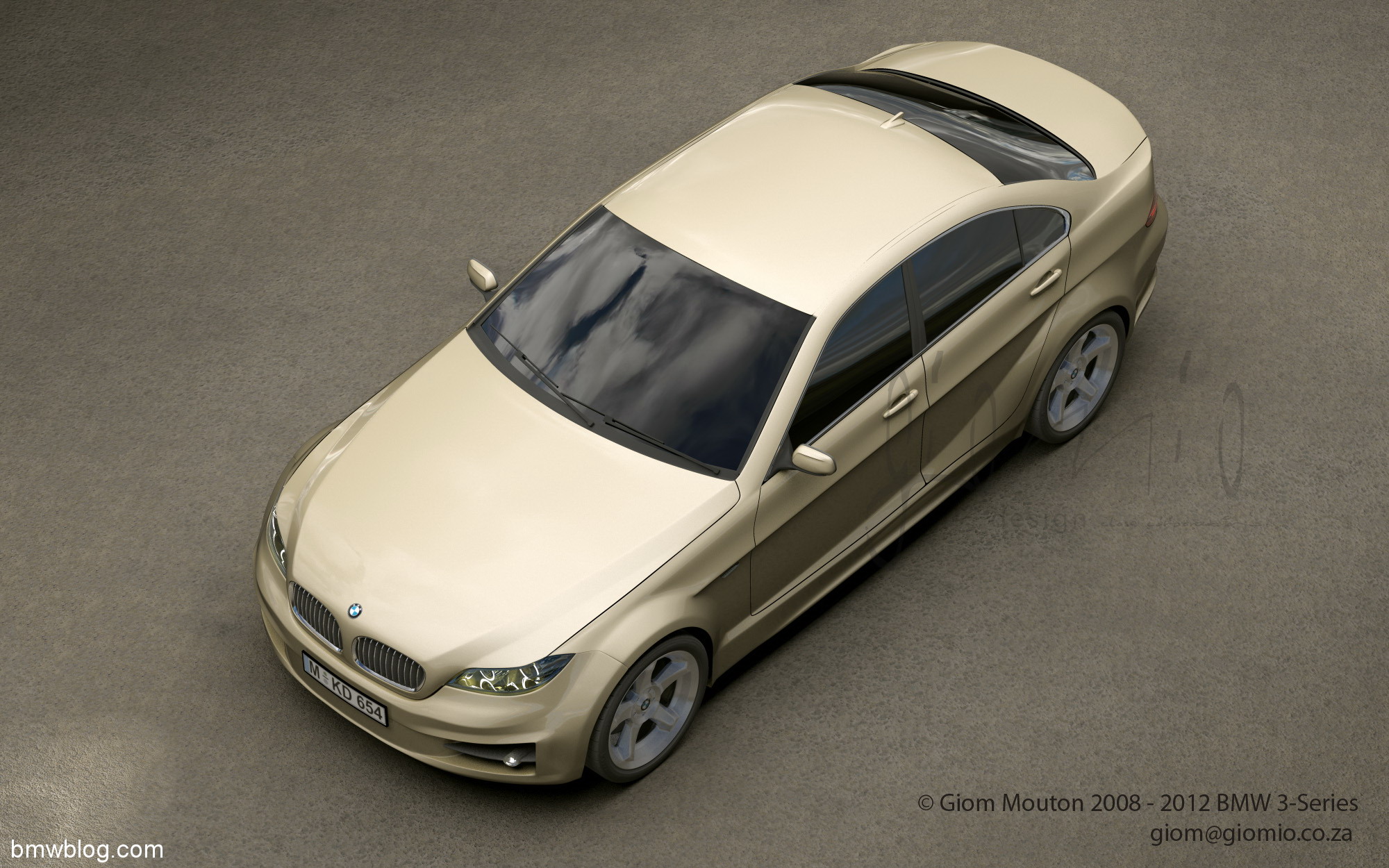
Bmw 3 series


bmw 3 series
Bmw 3 series

Bmw 3 series
2012 Bmw 3 series

Bmw 3 series
Bmw 3 series

Bmw 3 series
Bmw 3 series

2009 Bmw 3 series
2009 Bmw 3 series